

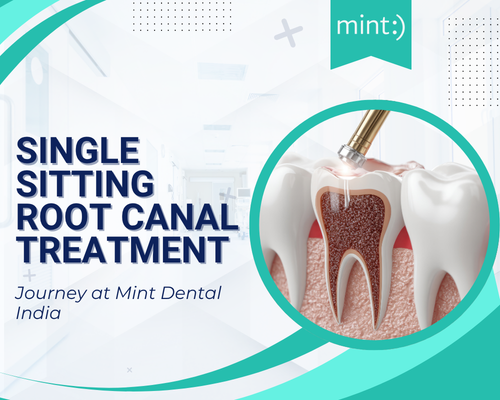
A toothache can make even the simplest daily activities difficult. Eating, drinking, or even talking can become uncomfortable when a tooth is infected. Fortunately, modern dentistry offers an advanced solution known as Single Sitting Root Canal Treatment, which helps save an infected tooth in just one appointment.
Many patients are surprised to learn that root canal treatment does not always require multiple visits. With improved dental technology and advanced techniques, a root canal can often be completed in a single sitting, making the procedure faster, more convenient, and highly effective.
What Is a Single Sitting Root Canal Treatment?
A Single Sitting Root Canal Treatment (RCT) is a dental procedure performed to remove infected or damaged pulp from inside a tooth and seal it during the same appointment. The goal is to eliminate infection, relieve pain, and preserve the natural tooth.
The pulp is the soft tissue inside the tooth that contains nerves and blood vessels. When it becomes infected due to deep decay, cracks, trauma, or repeated dental procedures, it can cause severe pain and sensitivity. A root canal removes the infected pulp, cleans the root canals, disinfects the area, and seals the tooth to prevent future infection.
Unlike traditional root canal treatment that may require two or more visits, a single sitting root canal completes the entire procedure in one appointment whenever clinically suitable.
Benefits of Single Sitting Root Canal Treatment
1. Saves Time
One of the biggest advantages is convenience. Busy professionals, students, and working individuals can complete their treatment in a single visit without taking multiple days off.
2. Immediate Pain Relief
Since the infected tissue is removed during the appointment, patients often experience significant relief from pain soon after treatment.
3. Reduced Risk of Reinfection
Completing the procedure in one sitting minimizes the chances of bacteria entering the tooth between appointments.
4. Fewer Dental Visits
Patients do not need to schedule multiple appointments, making the process more comfortable and stress-free.
5. Cost-Effective in Many Cases
Although treatment costs vary depending on the condition of the tooth, fewer visits often reduce additional expenses related to travel and time away from work.
Who Is a Suitable Candidate?
Single Sitting Root Canal Treatment may be recommended for patients who have:
- Deep tooth decay reaching the pulp
- Severe tooth sensitivity
- Tooth pain while chewing
- Cracked or fractured teeth
- Dental trauma affecting the pulp
- Early-stage dental infections
Step-by-Step Process of Single Sitting Root Canal Treatment
Examination and Diagnosis
The dentist first evaluates the affected tooth using a clinical examination and digital X-rays. This helps assess the extent of infection and determine whether a single sitting procedure is appropriate.
Local Anaesthesia
A local anaesthetic is administered to ensure the treatment is completely comfortable and pain-free.
Access Opening
A small opening is created in the tooth to reach the infected pulp tissue inside.
Cleaning and Shaping
Specialised instruments are used to remove the infected pulp, clean the root canals, and shape them for proper sealing.
Disinfection
The canals are thoroughly disinfected to eliminate bacteria and reduce the risk of future infection.
Filling and Sealing
The cleaned canals are filled with a biocompatible material and permanently sealed.
Final Restoration
Depending on the condition of the tooth, a filling or dental crown may be recommended to restore strength and function.
Recovery After Single Sitting Root Canal Treatment
Recovery is generally smooth and uncomplicated. Most patients return to their normal routine the same day or the following day.
Here are some recovery tips:
- Avoid chewing hard foods on the treated side for a few days
- Maintain excellent oral hygiene
- Brush and floss regularly
- Take prescribed medications if advised by your dentist
- Attend follow-up appointments if recommended
- Consider a dental crown if suggested to protect the treated tooth
Mild sensitivity or tenderness for a few days is normal and usually subsides quickly.
Is Single Sitting Root Canal Treatment Painful?
This is one of the most common concerns among patients. Modern root canal treatment is performed using advanced techniques and effective anaesthesia, making the procedure comfortable. In fact, root canal treatment is designed to relieve pain caused by infection rather than create it.
Why Choose Mint Dental Clinic?
At Mint Dental Clinic, patient comfort and long-term dental health are top priorities. The clinic is led by experienced dental professionals � Dr. Khushboo Ronak Khokhani and Dr. Ronak Mukesh Khokhani.
Using advanced diagnostic tools and modern treatment techniques, the team provides precise, comfortable, and effective root canal treatments tailored to each patient's needs.
Book Your Appointment Today
Don't let tooth pain affect your daily life. Early treatment can help save your natural tooth and prevent further complications.
Schedule your consultation today with our expert doctors and take the first step toward a healthier, pain-free smile.
Frequently Asked Questions
1. How long does a single sitting root canal treatment take?
Most procedures take approximately 60 to 90 minutes, depending on the complexity of the tooth.
2. Is a single sitting root canal safe?
Yes. When performed on suitable cases, it is a safe and highly successful treatment option.
3. Can I eat after the procedure?
You can eat after the numbness wears off, but it is advisable to avoid hard or sticky foods for a few days.
4. Will I need a crown after root canal treatment?
In many cases, a dental crown is recommended to protect and strengthen the treated tooth.
5. How successful is single sitting root canal treatment?
The success rate is very high when the procedure is performed correctly and followed by proper oral care.
6. When should I see a dentist for tooth pain?
You should seek dental care immediately if you experience persistent pain, swelling, sensitivity, or discomfort while chewing.