

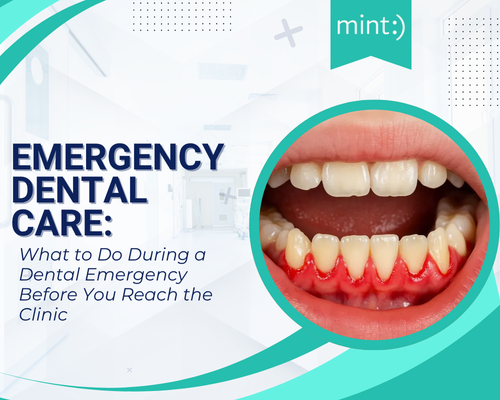
A dental emergency can happen at any time — while eating, playing sports, travelling, or even during sleep. A sudden toothache, broken tooth, bleeding gums, or swelling can be painful and stressful. Many people panic and do not know what to do before they reach the dentist.
At Mint Dental Clinic, Dadar, we believe that knowing the right first aid steps can help reduce pain, prevent further damage, and improve the chances of saving your tooth. While home care can provide temporary relief, visiting a dentist as soon as possible is always the safest option.
What Is a Dental Emergency?
A dental emergency is any dental problem that needs immediate attention to stop pain, control bleeding, save a tooth, or prevent infection from spreading. Some common dental emergencies include:
- Severe toothache
- Broken or chipped tooth
- Knocked-out tooth
- Swollen gums or facial swelling
- Bleeding after an injury
- Loose or broken filling
- Dental abscess
- Broken crown or bridge
Ignoring these problems can make the condition worse and may lead to more complicated treatment later.
Dental Injury First Aid
One of the most common emergencies is a dental injury caused by sports, falls, or accidents.
If Your Tooth Is Knocked Out
Quick action can sometimes save the tooth. Follow these steps:
- Hold the tooth only by the crown (the visible part) — do not touch the root
- If dirty, rinse it gently with clean water — do not scrub
- If possible, place the tooth back into its socket
- If not, keep it in milk or saliva until you reach the clinic
- Reach the dentist within 30–60 minutes for the best chance of saving the tooth
If You Break or Chip a Tooth
- Rinse your mouth with warm water
- Save any broken pieces if possible
- Apply a cold pack if swelling develops
- Avoid biting with that tooth
- Visit your dentist immediately — even small cracks can worsen if left untreated
What to Do During a Bleeding Tooth Emergency
Bleeding from the mouth after an injury or tooth removal can be frightening. If you experience a Bleeding Tooth Emergency:
- Place clean gauze over the area
- Bite down gently for 20–30 minutes
- Keep your head elevated
- Avoid rinsing your mouth repeatedly
- Do not spit forcefully
- Avoid smoking or drinking through a straw
If bleeding continues for more than 30 minutes or becomes heavy, seek immediate dental care.
Swollen Gums Emergency Care
Swollen gums are often caused by infection, an abscess, trapped food, or advanced gum disease. Signs include swollen or painful gums, bad taste in the mouth, pus around the tooth, facial swelling, and fever.
For temporary Swollen Gums Emergency Care:
- Rinse with warm salt water
- Keep the area clean
- Drink plenty of water
- Avoid very hot or spicy foods
- Take medicines only if advised by your dentist
Emergency Root Canal Treatment
Sometimes a severe toothache is caused by an infected tooth nerve. In these cases, Emergency Root Canal Treatment may be required. Symptoms include:
- Severe continuous pain
- Pain while biting
- Swelling around the tooth
- Sensitivity to hot and cold
- Pus near the tooth
Before visiting the clinic:
- Rinse your mouth with warm water
- Use a cold compress on the outside of the face if swelling is present
- Avoid chewing on the painful side
- Do not place painkillers directly on the gums
Emergency root canal treatment helps remove the infection, reduce pain, and save your natural tooth.
Emergency Tooth Extraction
Sometimes a tooth is too badly damaged to be repaired. An Emergency Tooth Extraction may be needed if:
- The tooth is badly broken
- There is a severe infection
- A wisdom tooth causes unbearable pain
- Advanced gum disease has loosened the tooth
- The tooth cannot be restored
Until you reach the dentist: avoid touching the tooth, eat soft foods only, keep the mouth clean, and avoid chewing on the affected side. Only a dentist can decide whether extraction is necessary.
Managing Severe Tooth Pain
Tooth pain usually indicates that something is wrong — decay, infection, a cracked tooth, gum disease, or a wisdom tooth problem. Temporary relief includes:
- Warm saltwater rinse
- Cold compress on the cheek
- Avoiding sugary foods
- Eating soft meals
Never ignore severe pain, especially if swelling or fever is present.
Why Immediate Dental Care Is Important
Many people wait until the pain becomes unbearable before visiting a dentist. Getting professional care quickly often makes treatment simpler and recovery faster. Early treatment helps:
- Save natural teeth
- Reduce infection
- Prevent tooth loss
- Lower treatment costs
- Avoid serious complications
Book Your Emergency Appointment Today
If you are experiencing sudden tooth pain, swelling, bleeding, or any dental injury, do not delay treatment. Quick action can often save your tooth and prevent serious complications.
At Mint Dental Clinic, Dr. Ronak Mukesh Khokhani and Dr. Khushboo Ronak Khokhani provide prompt diagnosis and treatment for patients of all ages — from Emergency Root Canal Treatment to Swollen Gums Emergency Care and Dental Injury First Aid.
Book your appointment today and receive expert emergency dental care from our experienced team.
Frequently Asked Questions
1. What is considered a dental emergency?
A dental emergency includes severe tooth pain, broken teeth, knocked-out teeth, swelling, uncontrolled bleeding, dental abscess, or any injury affecting your teeth or gums.
2. Can a knocked-out tooth be saved?
Yes. If treated within 30 to 60 minutes and handled properly, there is a good chance that the tooth can be successfully reattached.
3. Should I visit the dentist for swollen gums?
Yes. Swollen gums may be a sign of an infection or abscess. Early treatment prevents the infection from spreading.
4. How do I stop bleeding from a tooth injury?
Place clean gauze on the area and apply gentle pressure for 20–30 minutes. If bleeding does not stop, visit your dentist immediately.
5. Can a severe toothache require a root canal?
Yes. If the tooth nerve is infected, Emergency Root Canal Treatment may be the best option to remove the infection and save the natural tooth.