

A toothache can make even simple daily activities difficult. Many people ignore the pain because they are afraid they might need a root canal treatment. One of the biggest reasons people delay visiting a dentist is because they believe root canal treatment is painful. The truth is very different.
At Mint Dental Clinic, our experienced dental team provides pain-free root canal treatment using modern techniques and advanced equipment. If you have been advised to undergo a root canal, understanding the procedure can help you feel confident and relaxed.
What Is Root Canal Treatment?
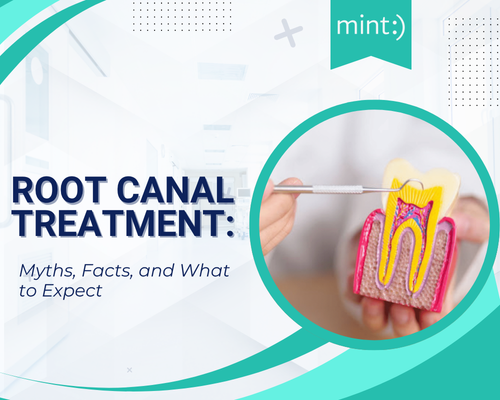
A root canal treatment is a dental procedure used to save a tooth that has been badly infected or damaged. Inside every tooth is a soft tissue called the pulp. This pulp contains nerves and blood vessels that keep the tooth healthy.
When the pulp becomes infected due to deep decay, a crack, or an injury, bacteria spread inside the tooth and cause severe pain, swelling, and sensitivity.
During a root canal treatment, the infected pulp is removed, the inside of the tooth is cleaned and disinfected, and the space is sealed. In most cases, a dental crown is placed on the treated tooth to restore its strength and function. This treatment allows you to keep your natural tooth instead of removing it.
Root Canal Treatment Myths and Facts
Many people have heard stories about root canals that are simply not true. Let us clear up the most common myths.
Fact: This is one of the biggest misconceptions. Modern dentistry has made pain-free root canal treatment possible. Local anaesthesia completely numbs the affected tooth, so you should only feel slight pressure during the procedure, not pain.
Fact: Saving your natural tooth is always the first choice whenever possible. Removing a tooth can lead to chewing problems, shifting of nearby teeth, and may require costly replacement options like implants or bridges.
Fact: Most root canal treatments are completed in one or two appointments, depending on the severity of the infection.
Fact: There is no scientific evidence that root canal treatment causes other health problems. In fact, it removes infection from the tooth and improves your oral health.
Fact: After the treatment and placement of a dental crown, the tooth can function normally for many years with proper care.
What to Expect During Root Canal Treatment
Knowing the process helps reduce anxiety. Here is what to expect at each stage.
Step 1: Dental Examination
Your dentist examines your tooth and takes digital X-rays to understand the infection and plan the treatment.
Step 2: Local Anaesthesia
The area around the tooth is completely numbed. This makes the treatment comfortable and almost pain-free.
Step 3: Cleaning the Tooth
A small opening is made in the tooth to remove the infected pulp. The root canals are carefully cleaned and disinfected.
Step 4: Filling the Root Canals
The cleaned canals are filled with a special dental material to prevent future infection.
Step 5: Tooth Restoration
A filling or dental crown is placed to restore the strength and appearance of the tooth.
Root Canal Procedure Explained
Many patients wonder exactly what happens during the treatment. The goal is not to remove the tooth but to remove only the infected tissue inside it.
The dentist carefully cleans the inside of the tooth while preserving the outer structure. Once cleaned, the tooth is sealed to stop bacteria from entering again. The procedure is performed using advanced dental instruments that improve accuracy and comfort.
Benefits of Root Canal Treatment
Choosing a root canal offers many long-term advantages.
- Saves Your Natural Tooth — Keeping your original tooth helps maintain proper chewing and speech.
- Stops Tooth Pain — Removing the infected pulp eliminates the source of pain and discomfort.
- Prevents Infection from Spreading — Early treatment prevents the infection from affecting nearby teeth and gums.
- Restores Normal Function — Once restored with a crown, your tooth can function like any other healthy tooth.
- Improves Oral Health — Treating the infection protects your overall dental health and reduces future complications.
Signs You May Need Root Canal Treatment
You should visit a dentist if you notice:
- Severe toothache while chewing
- Sensitivity to hot or cold that lasts for a long time
- Swollen gums near the painful tooth
- A pimple-like swelling on the gums
- Tooth discoloration
- Pain while biting food
Early diagnosis often makes treatment simpler and more comfortable.
Is Root Canal Treatment Safe?
Yes. Root canal treatment is one of the safest and most successful dental procedures. With modern technology, digital imaging, and improved techniques, success rates are very high. Most patients return to their normal routine the same day or the following day.
Tips After Root Canal Treatment
To help your tooth heal properly:
- Avoid chewing hard foods until the permanent crown is placed
- Brush twice daily using a soft toothbrush
- Floss regularly
- Take prescribed medicines as directed
- Visit your dentist for follow-up appointments
- Maintain regular dental check-ups every six months
Good oral hygiene helps your treated tooth last for many years.
Book Your Appointment Today
Do not ignore tooth pain. Early treatment can save your natural tooth and prevent bigger dental problems.
At Mint Dental Clinic, Dr. Ronak Mukesh Khokhani and Dr. Khushboo Ronak Khokhani provide experienced, gentle, and pain-free root canal treatment using advanced technology and personalised care.
Book your appointment today and experience safe, comfortable, and expert dental care at Mint Dental Clinic.
Frequently Asked Questions
1. Is root canal treatment painful?
No. Modern pain-free root canal treatment is performed under local anaesthesia, making the procedure comfortable.
2. How long does a root canal treatment take?
Most treatments are completed in one or two visits, depending on the condition of the tooth.
3. Can I eat after a root canal?
Yes, but wait until the numbness wears off. Avoid chewing on the treated tooth until the permanent crown is placed.
4. How long does a root canal-treated tooth last?
With proper care, good oral hygiene, and regular dental check-ups, a treated tooth can last for many years.
5. When should I visit a dentist for tooth pain?
If your tooth pain lasts more than one or two days, or if you have swelling, sensitivity, or pain while chewing, visit a dentist immediately.